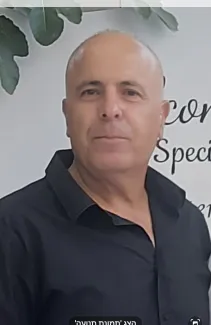
Prof. Mustafa Abbasi

Prof. Mustafa Abbasi
Mustafa Abbasi 2025
Accordion Title Biographical Info

Biographical Info

I currently serve as the Vice President for Teaching Affairs, and a faculty member in the Galilee Studies Program. I completed my B.A., M.A., and Ph.D. at the university of Haifa.

From 2010 to 2015, I served as Head of the Department of Multidisciplinary Studies, and from 2018 to 2022, as Dean of Students. In addition to teaching and research activities, I’m an active member of several local and international associations devoted to the study of Galilee history. 

Accordion Title Areas of Interest

Areas of Interest

•    Social history of the Palestinian Arab population from the late Ottoman period until the end of the British Mandate. 
•    Historical research on the 1948 War and the first years of the State of Israel.
•    Rural settlement in the Golan and Galilee during the Mamluk and Ottoman periods.


Accordion Title Research

Research

My research focuses on two primary fields: 

1.    Social history research of the Palestinian Arab population from the late Ottoman period until the end of the British Mandate. Most of this research examines social and political aspects of the mixed cities and the Arab towns and villages in the Galilee. Additional studies have addressed on Jerusalem and Nablus and their rural surroundings. 

2.    Historical research of the 1948 War and the first years of the State of Israel. In this field as well, much of my research has focused on the Galilee, particularly the four cities of Safed, Acre, Nazareth, and Tiberias, and their rural surroundings.

Accordion Title Teaching

Teaching

•    British Mandate Rule in Palestine

•    History of the Palestinian National Movement

•     Ruling Families in Palestine in the Ottoman and Mandatory Periods

•    The Arab Village in Palestine: End of the Ottoman and through the Mandate Period 

•     History of the Middle East in the Modern Period 

•    Arab Population in the State of Israel: Majority-Minority Relations

•    Arab Population of the Galilee: Social and Religious Structure

Accordion Title Publications

Publications

Selected publication (for a full list look at my CV of Google Scholar):
Books:
Abbasi, M., Raphael, k., (2025). The Golan in the Mamluk and Ottoman periods: An archaeological and historical study. Nelson Glueck, School of Biblical Archaeology, Hebrew Union College – Jewish Institute of Religion, Jerusalem. 

Abbasi, M. 2021. Tiberias and its Arab residents during the British Mandate 1918-1948. Jerusalem: Yad Izhak Ben-Zvi. (Heb.).
 

Articles: 

Abbasi M., & Raphael, K. 2024. Historical geographies of a Damascan population crisis: Jawlān and Ḥawrān in the late Mamluk - early Ottoman periods. Journal of Historical Geography, Volume 86, December 2024, 297-310.

Raphael, K., Abbasi M., & Eran Meir, 2024. Between Safad and Damascus: Excavations at the Village of Naʿarān and Mamluk and Early Ottoman Rural Settlements in the Golan, Mamluk studies Review, Vol. 27, 2024, 337-355

Abbasi M. 2022. From Aleppo to Tel Hai: The events of Tel Hai and the new order in Greater Syria in 1919-1920. Journal of Israel Studies, January, 67-86.1.

Abbasi M., & Raphael, K. 2021. From central region to marginal region: Mamluk and Ottoman settlement in the Galilee (1260-1746). Cathedra, 179, 39-62. (Heb.).

Abbasi M. 2020. Urban-rural relations in Mandatory Palestine: Tiberias, urban notables and control of the Palestinian countryside, 1918-1948. Journal of Holy Land and Palestine Studies, 19(May), 81-99.


Accordion Title Prof. Mustafa Abbasi CV

Prof. Mustafa Abbasi CV

Accordion Title Awards

Awards

See CV and Google scholar citation index below.

Accordion Title Presentations

Presentations

Book Launch: Prof. Mustafa Abbasi on Tiberias and Its Arab Residents, 1918–1948 (Heb., at 54:00), 13.4.2022. 

Knesset Channel – Those Were the Days with Prof. Mustafa Abbasi (Heb.), 26.6.2018 

Accordion Title Link to

Link to

Link to my Research Gate account
 
Link to my Google Scholar account

"Zionism from the Palestinian Perspective", a conversation with Dr. Gilad Sharvit (16.11.2025) (Hebrew)