About the Laboratory 

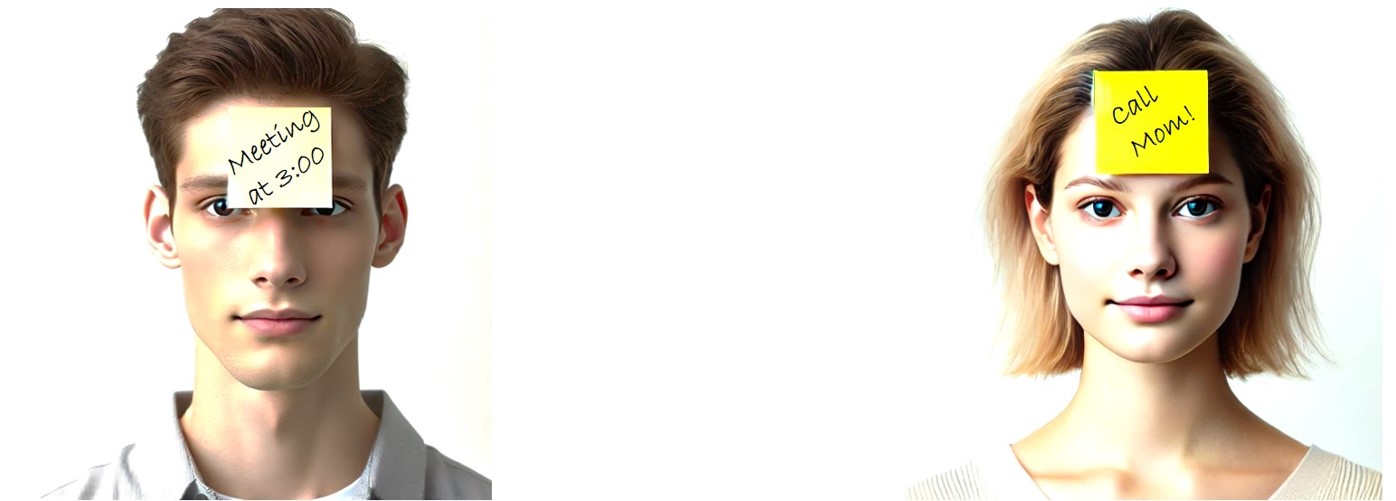
The ability to learn and remember information from the world around us, as well as from our internal world, is essential in order to function and to survive. In the Memory and Learning Processes Lab, we investigate how internal and external factors influence the formation and consolidation of different memory types. Additionally, the lab explores how the learning procedures influence memory processes and how learning and memory change with age. The ultimate goal is to discover how to enhance learning and memory, thereby improving our life quality as constant learners.


תמונה
המעבדה לתהליכי זיכרון ולמידה-אילוסטרציה


Research Areas 

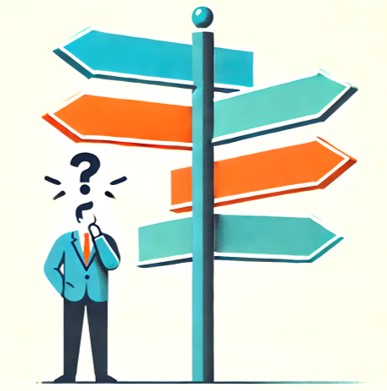
Spatial and Navigational Learning and Memory

 Learning and Memory in Older Adults

Wakeful Rest and Memory Consolidation in Various Learning Processes

 Alternative neural mechanisms of learning and memory

תמונה
מעבדת זיכרון ולמידה-אילוסטרציית תחומי מחקר


Accordion Title Staff and Researchers

Staff and Researchers

Dr. Maayan Merhav (PhD) – Head of Laboratory

Mail: [email protected]

Eyal Reiner - PhD student 

Ella Fridman - Master Thesis 

Research at the Laboratory

Research at the Laboratory

Accordion Title How environmental designs influence wayfinding in young and older adults?

How environmental designs influence wayfinding in young and older adults?

Research in collaboration with Prof. Dafna Fisher-Gevirtzman from the Faculty of Architecture and Town Planning at the Technion, funded by the Israeli Science Foundation. The research relies on neurobiological processes of old age, according to which we design environments aimed at aiding spatial orientation and improving navigation performance. To examine these environments, we build virtual environments and using virtual reality technologies we track navigation within these environments. Studies have shown that in older age, there is less reliance on landmarks and more on route learning and the geometric structure of the environment and the goal of the research is to create environments that enhance route learning and navigation based on geometry. 

Accordion Title  How post learning, short wakeful rest influences the consolidation of semantic and spatial memory?

 How post learning, short wakeful rest influences the consolidation of semantic and spatial memory?

It has been shown that a short wakeful rest after learning improves various types of memories, but its effect on semantic memory is still unclear. Moreover, different semantic learning procedures activate different neural mechanisms, making it important to examine which semantic learning mechanisms wakeful rest might benefit. Similarly, it has been shown that wakeful rest strengthens spatial memories, but it is not known which components of spatial memory are enhanced by wakeful rest. The research will attempt to address these questions using semantic learning techniques and spatial learning methods. The study's conclusions will provide insights into effective learning strategies and the neural mechanisms that benefit from wakeful rest. 

Accordion Title Bright Light Therapy for Augmentation of Memory Performance in Older Adults

Bright Light Therapy for Augmentation of Memory Performance in Older Adults

Research in collaboration with Professor Maria Korman from Ariel University, funded by the Ariel-Tel Hai Collaborative Research Fund. The study examines how exposure to bright light affects memory processes such as pattern separation and pattern completion in older adults. Bright light exposure has a beneficial impact on mental and cognitive states, and the research investigates its effect on specific declines in memory ability characteristic of old age. It is important to examine the impact of light exposure at ages when people tend to spend time indoors.
 

Accordion Title  Alone and Sleepy: The role of Loneliness and Sleep Disruption in Cognitive Functioning in Aging

 Alone and Sleepy: The role of Loneliness and Sleep Disruption in Cognitive Functioning in Aging

Research in collaboration with Professor Ilana Hairstein, Dr. Adi Witman-Shor, and Prof. Suleiman Khatib, funded by the Joint Research Fund (Tel Hai – Migal) in the field of aging. The study examines how social life in older age affects hippocampus-dependent memory performance, by investigating the mediating role of stress (measured by cortisol levels) and sleep quality. Studies have shown a link between social engagement and hippocampal function; thus, the research investigates how social functioning in later life impacts hippocampus-dependent memory tasks.
 

Accordion Title The neural basis of age-related deficit in memory updating and the influence of motor activity on memory updating

The neural basis of age-related deficit in memory updating and the influence of motor activity on memory updating

Funded by the ministry of science, Israel-France foundation.

Accordion Title Selected Publications

Selected Publications

Merhav, M., & Fisher-Gewirtzman, D. (2026). Designing for Memory: How Pathway Configuration Shapes Long-Term Navigational Representations. Psychological Research.

Merhav, M., & Gewirtzman, D. F. (2026). How Environmental Geometry Influences Navigation in Young and Older Adults?. Journal of Environmental Psychology, 102900.

Merhav, M. (2024). How spatial-cue reliability affects navigational performance in young and older adults. Aging, Neuropsychology, and Cognition, 1-17.

Merhav, M., & Fisher-Gewirtzman, D. (2023). How pathways' configuration impacts wayfinding in young and older adults. Journal of Environmental Psychology, 90, 102065.

Merhav, M., Riemer, M., & Wolbers, T. (2019). Spatial updating deficits in human aging are associated with traces of former memory representations. Neurobiology of aging, 76, 53-61.

Merhav, M., & Wolbers, T. (2019). Aging and spatial cues influence the updating of navigational memories. Scientific Reports, 9(1), 11469.

Merhav, M., Karni, A., & Gilboa, A. (2015). Not all declarative memories are created equal: fast mapping as a direct route to cortical declarative representations. Neuroimage, 117, 80-92.

Merhav, M., Karni, A., & Gilboa, A. (2014). Neocortical catastrophic interference in healthy and amnesic adults: a paradoxical matter of time. Hippocampus, 24(12), 1653-1662.


Accordion Title Media

Media

Accordion Title Laboratory Equipment

Laboratory Equipment

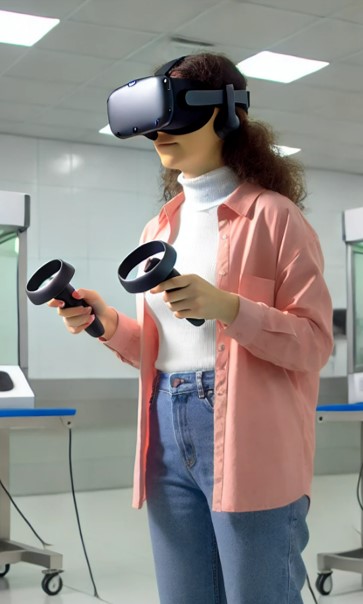
Immersive, virtual reality lab 

תמונה
מעבדה לזיכרון ולמידה-אילוסטרציית מכשור